
Guide · 9 min read
Why use an Airbnb management company in Nice?
Manage your Airbnb alone or delegate? The real time per stay, seven-day availability and the commission-versus-net sum, with no promises.
By Melek Ben Mlouka, founder of Yellow Conciergerie, Airbnb Superhost in Nice
Published
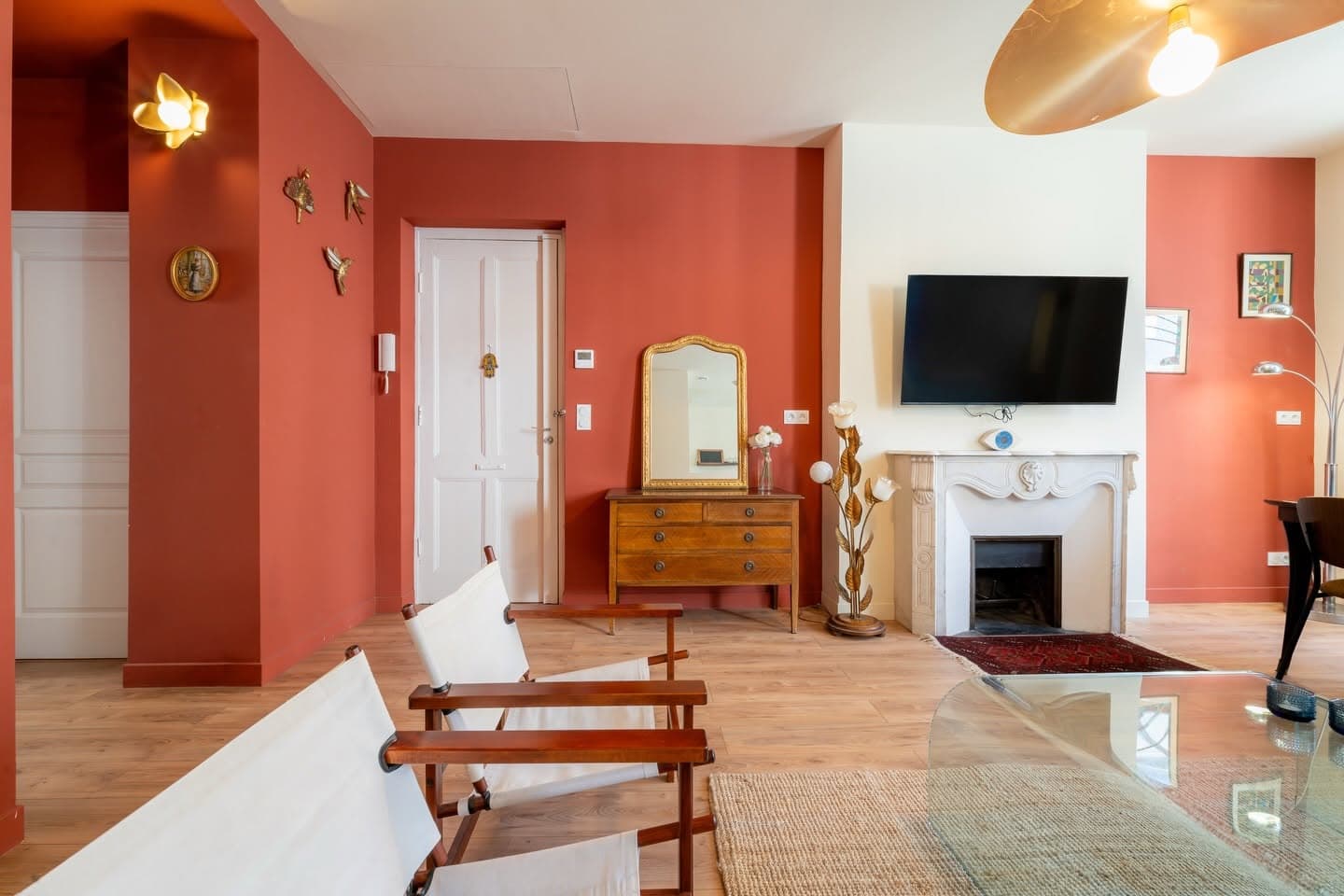
Using an Airbnb management company in Nice means trading a commission — usually 20 to 25 % of income on the Nice market — for all the day-to-day work: messages, check-ins, cleaning, linen, pricing, surprises. In high summer, a well-booked flat goes through five to six turnovers a month. Managing alone is entirely possible. The real question is what those hours are worth to you, and whether you can be reachable seven days a week.
This article does not compare management companies with one another, nor walk through gross to net line by line: it sets out the first trade-off, the one every owner makes before even asking for a quote.
Updated 13 October 2026.
What managing your Airbnb yourself actually involves
A short-term rental is not a long-term let with tenants who change more often. It is a small hospitality business, with a guest arriving every four or five days and expecting hotel-level service in a flat. Every stay runs through the same tasks, always in the same order:
- Before arrival: answering questions, often before the booking, accepting the request, sending access instructions, restating the house rules.
- Arrival day: handing over keys in person or checking the key box works, helping the guest who cannot find the building, who lands at 11 pm, or whose flight is late.
- During the stay: the Wi-Fi that drops, the air conditioning that will not start, the question about parking or the nearest beach.
- Departure: a full clean, fresh linen, washing and drying, restocking supplies, checking the condition of the flat.
- After the stay: reviewing the guest, answering their review, handling any refund request or damage.
Add the tasks that do not depend on stays: adjusting prices, keeping the calendar in sync between Airbnb and Booking, dealing with tradespeople, following tourist tax and regulation, preparing the tax return. None of it is hard. It is the accumulation, and the imposed timing, that weighs.
The real time, turnover by turnover
Nobody publishes reliable timings for these tasks, and we will not invent any. Here instead is an indicative order of magnitude, to adjust to your situation, for a one-bedroom flat in Nice:
- Messages before, during and after the stay: thirty minutes to an hour in total, spread over several days.
- Check-in: a few minutes with a working key box, an hour's round trip if you welcome guests in person.
- Cleaning and linen: two to three hours for a proper rental clean, plus washing and drying time.
- Checks and restocking: half an hour.
So count, conservatively, three to five hours per turnover. The pace depends on occupancy: on the Côte d'Azur, furnished rentals let by private owners were occupied 80 % of nights in August 2025, according to the Côte d'Azur Tourism Observatory. With stays of four to five nights — an assumption, length varies from one flat to another — that means five to six turnovers in the month. Five to six times three to five hours is fifteen to thirty hours in a month, before pricing and surprises. Month-by-month seasonality is covered in our article on Airbnb occupancy in Nice, month by month.
That total looks reasonable, and for many owners it is. But it hides the main point: you do not choose those hours.
What time does not tell you: availability
Cleaning happens between 11 am and 4 pm on departure day, not the following weekend. The guest locked outside writes at 11 pm, not when it suits you. The leak under the sink appears on a Sunday in August. Managing alone is not about finding twenty hours a month: it is about being reachable and mobile seven days a week all season long.
Platforms measure that availability. Response rate and response time feed into listing ranking and Superhost criteria. An owner who replies in the evening, after work, loses bookings to a listing that replies in minutes — not because the flat is worse, but because the guest has booked elsewhere in the meantime.
That is why self-management works very well in some cases and badly in others. The deciding factor is not skill, it is distance and schedule.
Commission versus net gain: how to think it through
The sum is always done on annual net, never gross. A management company takes a share of income; in return it can lift the average rate and occupancy, reduce wear and give you your time back. We do not promise a gain before seeing a property. The arithmetic, though, can be set out in advance.
A deliberately hypothetical example. A flat earns €20,000 in nightly revenue a year when self-managed. At a 22 % commission on those nights, management would cost €4,400. Two ways to read that figure:
- The break-even point: for the owner to keep the same income after commission, nightly revenue would need to rise by about 28 % (€20,000 ÷ 0.78 ≈ €25,640). If professional management beats that, the commission pays for itself; if not, the difference is the price of the time freed up.
- The hourly price: if self-managing this property takes you 200 hours a year, the commission amounts to buying those hours back at about €22 each. Whether that is expensive depends on what you would do with the time.
Neither reading gives the answer, but both ask the right question. Note what does not change: in most models cleaning is charged to the guest, whether you manage alone or not. What a commission covers, and the traps in how it is calculated, is set out in our article on Airbnb management commission and what it covers.
When managing alone makes sense
- You live ten minutes from the flat and your schedule lets you step in during the day, weekdays and weekends.
- You let your main home a few weeks a year. Capped at 120 days a year in Nice since 1 September 2026, it generates few turnovers, usually grouped in summer.
- You enjoy hosting, the contact with guests, the decoration, and it is a pleasure rather than a chore.
- You have a reliable network: someone for cleaning, a tradesperson who picks up, a friend who can help out.
In those cases self-management is coherent, provided you professionalise what can be: key box, scheduled messages, a calendar-sync tool, prices reviewed every week.
When delegating becomes rational
- You do not live in Nice, or only part of the year. That is the situation of most second-home owners.
- Your job does not let you reply within minutes or travel during the day.
- The flat is let all year: turnovers add up, and winter needs as much responsiveness as summer for lower income.
- You own several properties: tasks do not pool as well as you might think, especially when two departures fall on the same Saturday.
- Regulation worries you: registration number, change of use, tourist tax, night counting. One mistake costs more than a year of commission.
The in-between options
Between doing everything and delegating everything there is a middle ground. Some owners keep the listing and messages and outsource cleaning and linen. Others hand over management in summer and take it back in winter, or the reverse. These arrangements make real sense when you live locally.
They also have a limit: the quality of a stay is decided at the joins. Perfect cleaning does not make up for a late reply, and a well-priced listing does not make up for a guest stuck outside. When three people share one stay, nobody owns the whole — which is often where three-star reviews come from.
What stays with you even when delegating
Handing over your property does not mean losing interest in it. You remain the owner, and so responsible for the flat's compliance, your tax return and the big decisions: works, furnishing, dates kept for your own use. A good management company keeps you informed and involves you in those choices; it does not make them for you.
Tax, in particular, is not something a management company handles: it is prepared with an accountant, and the choice of regime often weighs more on net income than the commission rate. The current rules are set out in our guide to Airbnb tax in France in 2026: micro-BIC, classified rentals, LMNP.
Frequently asked questions
Why use an Airbnb management company?
To hand over the daily work of a short-term rental — messages, check-ins, cleaning, linen, pricing, surprises — and the seven-day availability it requires. In return the company takes a commission, usually 20 to 25 % of income in Nice.
Can you manage your Airbnb yourself in Nice?
Yes, especially if you live nearby, let your main home a few weeks a year or have a reliable network for cleaning and repairs. You then need to professionalise access, messaging and price reviews.
How much time does managing an Airbnb take?
As an indicative order of magnitude, three to five hours per turnover, cleaning included. With five to six turnovers in high summer, that is fifteen to thirty hours in the month, at times you do not choose.
Is a management company worth it for a single flat?
It depends on the rate and occupancy gain it achieves and the value you put on your time. At a 22 % commission, nightly revenue must rise by about 28 % for your income to stay the same: beyond that, the commission pays for itself.
Run the numbers for your property
The only way to decide is to start from your flat's figures rather than an average. Our Airbnb income estimator for Nice gives you a range in two minutes, based on your neighbourhood and property type: the basis for comparing what you would keep alone and what you would keep by delegating. And if you would rather talk it through, Melek answers you directly.